7 Easy Ways to Get 30g Protein in a Vegetarian Meal (2026)
I repainted my nails four times last week chasing one shade of chrome — and I felt the same frustration when I first tried to hit 30 grams of protein in a vegetarian meal. For years, I assumed that kind of number was only for meat-eaters or people who downed protein shakes. But after a few months of experimenting (and some very dense lentil soups), I can tell you: 30g per meal is not only doable — it’s surprisingly easy once you know a few simple tricks. Here are seven ways to get there with real food, no powders required.
Why 30g Protein Per Meal Matters (and How It’s Totally Doable Vegetarian-Style)
Let’s be honest: the standard advice — “eat a variety of plant foods and you’ll be fine” — can feel useless when you’re actually hungry an hour after a salad. Research from sources like the Harvard T.H. Chan School of Public Health shows that spreading protein evenly across meals (roughly 25–30g per meal) improves satiety, supports muscle repair, and helps steady blood sugar. That’s a big deal if you’re trying to avoid the 3 p.m. energy crash or build strength without eating animal products.
The misconception that vegetarians can’t hit that target usually comes from looking at single foods in isolation. A cup of cooked lentils has about 18g of protein. A single egg has 6g. Neither alone hits 30g. But when you start layering — lentils plus a handful of pumpkin seeds plus a dollop of Greek yogurt — you cross the line fast. The trick is strategic stacking, not superfoods. And once you learn the combos, it becomes second nature.
1. Layer Legumes: The Backbone of Every High-Protein Vegetarian Plate
Legumes are the workhorses of a high-protein vegetarian diet. A single cup of cooked lentils gives you 18g of protein. Add half a cup of firm tofu (another 10g) and you’re at 28g — just 2g shy of the target. That’s before you add any grains, nuts, or sauce.
The key is to treat legumes as the base, not a side. When I meal prep on Sundays, I cook a big batch of lentils or chickpeas and use them in different ways throughout the week: tossed into salads, blended into veggie burgers, or simmered into a quick curry. Here’s a specific combo that’s become my go-to: 1 cup cooked chickpeas (14g) + 1/2 cup cooked quinoa (4g) + 1/4 cup tahini dressing (about 6g from sesame seeds) = 24g. Add a handful of spinach (1g) and a sprinkle of nutritional yeast (2g per tablespoon) and you’re at 27g. Top with a poached egg or a few extra chickpeas, and you’re over 30g.
For storage, I freeze cooked lentils in 1-cup portions. They thaw in minutes in a skillet, which makes throwing together a high-protein dinner faster than ordering takeout.
2. The Power Duo: Whole Grains + Plant Protein That Adds Up Fast
Whole grains like quinoa, farro, and amaranth don’t get enough credit for their protein content. One cup of cooked quinoa packs 8g of protein. Farro has about 7g. Amaranth has 9g. Pair any of these with legumes, and you not only boost the gram count — you also create a complete protein profile, meaning you get all nine essential amino acids in one meal.
Here’s a formula I use almost daily: 1 cup cooked quinoa (8g) + 1/2 cup black beans (7g) + 1/4 cup pumpkin seeds (9g) + 1 tablespoon hemp hearts (3g) = 27g. Then I add a dollop of Greek yogurt (about 6g per 2 tablespoons) or a few slices of firm tofu (10g per 3oz). That pushes it well past 30g. The combination of textures — fluffy quinoa, creamy beans, crunchy seeds — makes it satisfying in a way that a bowl of just one grain never is.
One counter-intuitive insight: don’t worry about “complementing” proteins at every single meal. The old myth that you must eat rice and beans together to get complete protein has been debunked. As long as you eat a variety of plant proteins throughout the day, your body will get all the amino acids it needs. But combining them in one bowl does make hitting 30g easier numerically, so I still do it.
3. Dairy and Eggs: The Quick-Fix Protein Powerhouses (If You Eat Them)
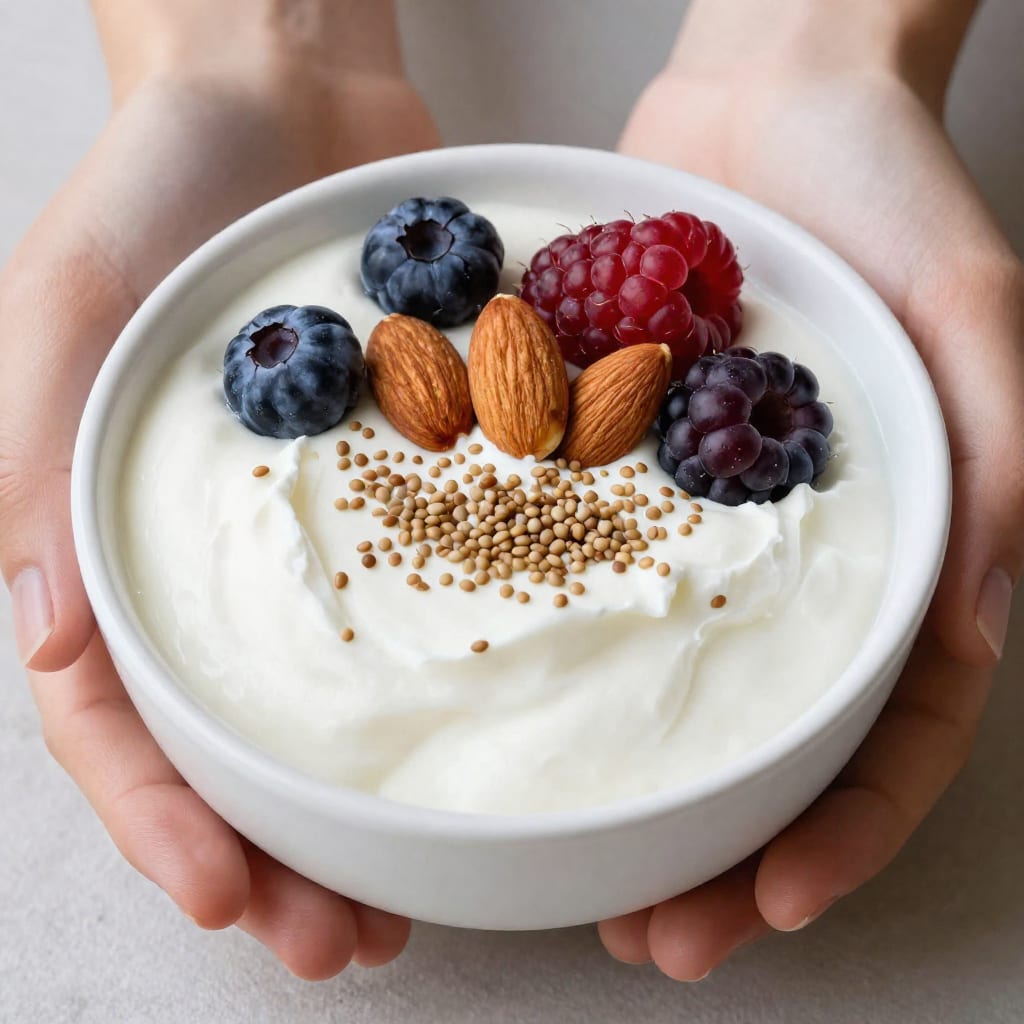
For lacto-ovo vegetarians, dairy and eggs are the fastest way to hit 30g with almost no effort. One cup of plain Greek yogurt has about 20g of protein. Add two tablespoons of hemp seeds (6g) and a quarter cup of almonds (6g), and you’ve got 32g in a bowl that takes 30 seconds to assemble. That’s breakfast, snack, or even a light dinner if you’re in a rush.
Cottage cheese is another underrated option. Half a cup has 14g. Pair it with a sliced hard-boiled egg (6g) and a tablespoon of pumpkin seeds (3g), and you’re at 23g — add a slice of whole-grain toast (3–4g) and you’re close. For plant-based eaters, unsweetened soy milk (7g per cup) and pea-protein yogurts (about 12g per serving) can fill a similar role, though you’ll need to combine them with nuts or seeds to hit 30g.
4. Secret Weapons: Hemp Seeds, Nutritional Yeast, and Other Nutrient-Dense Add-Ins
This is where the game changes. A tablespoon of hemp seeds gives you 3g of protein. Two tablespoons — which is about the amount you can sprinkle on a bowl of oatmeal or a salad without noticing — gives you 6g. Nutritional yeast adds 2g per tablespoon plus a cheesy flavor that makes everything taste better. Chia seeds (2g per tablespoon) and spirulina (4g per teaspoon) are also solid options, though spirulina has a strong taste that not everyone loves.
My personal trick: I keep a jar of “protein sprinkle” on my counter — a mix of hemp seeds, nutritional yeast, and crushed almonds. I add it to almost everything: scrambled tofu, pasta sauce, roasted vegetables, even popcorn. It adds 5–8g of protein per tablespoon without changing the dish’s flavor profile. For someone who’s not a fan of protein powders, this is a total game-changer.
One caution: these add-ins are calorie-dense, so if you’re watching your intake, measure them. Two tablespoons of hemp seeds have about 120 calories. That’s fine as part of a meal, but it can add up if you’re sprinkling liberally all day.
5. Tofu, Tempeh, and Seitan: The Heavy Hitters of Plant-Based Protein
If you want a concentrated protein source that mimics the texture of meat, look to tofu, tempeh, and seitan. Tofu has about 10g per 3oz serving. Tempeh — which is fermented soybeans — has 15g per 3oz. Seitan, made from wheat gluten, is the heavyweight: 21g per 3oz. That means a 4oz serving of seitan (28g) plus a tablespoon of peanut sauce (2g) over stir-fried veggies gives you exactly 30g with almost no effort.
I’ve found that the key to loving these ingredients is preparation. Tofu needs pressing (or freezing and thawing) to get a meatier texture. Tempeh benefits from steaming or marinating before cooking. Seitan can be sliced thin and pan-fried until crispy. When I want a quick 30g meal, I cube extra-firm tofu, toss it in soy sauce and cornstarch, and bake it at 400°F for 25 minutes. That yields about 12g per serving. Then I add it to a bowl with quinoa, roasted broccoli, and a tahini dressing — easily 30g+.
6. Smart Snacking: How to Turn Snacks into Protein-Boosted Mini-Meals
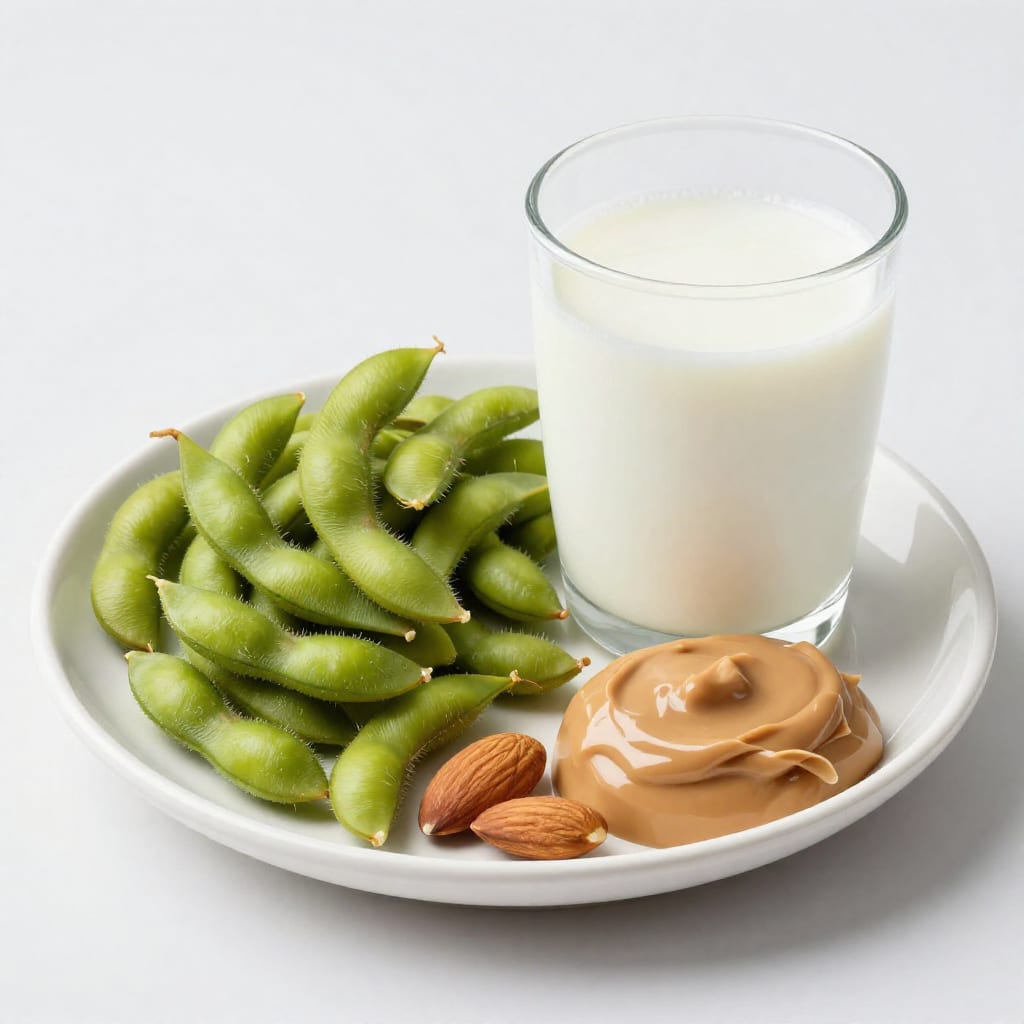
Snacking is where most people fall short on protein. But with a little planning, a snack plate can easily deliver 30g. Try this combo: 1/2 cup edamame (11g) + 1/4 cup almonds (7g) + 2 tablespoons peanut butter (8g) + 1 cup unsweetened soy milk (8g) = 34g. That’s a snack that’s also a meal — and it takes about two minutes to assemble if you have edamame steamed and almonds on hand.
Roasted chickpeas are another favorite. One cup has about 14g. Pair them with a quarter cup of roasted pumpkin seeds (9g) and a small apple (0g) for crunch and sweetness, and you’re at 23g — close enough that adding a glass of soy milk or a string cheese (7g) pushes it over 30g. The key is to always have a few high-protein snacks prepped: hard-boiled eggs, edamame in the freezer, individual hummus cups, and nut-seed mixes.
7. Protein-Packed Recipes That Prove 30g Is Easy (No Powder Required)
Here are three recipes I’ve tested that naturally hit 30g without any protein powder. They’re simple enough for a weeknight and use ingredients you can find at any grocery store.
Lentil Soup with Spinach and Lemon
1 cup cooked lentils (18g) + 1 cup low-sodium vegetable broth + 2 cups fresh spinach (2g) + 1 tablespoon nutritional yeast (2g) + 1 tablespoon olive oil + juice of half a lemon. Simmer lentils and broth, stir in spinach until wilted, add nutritional yeast and lemon. Serve with 1 slice whole-grain toast (4g) for a total of 26g. Add a poached egg (6g) to reach 32g.
Tofu Scramble with Veggies and Hemp Seeds
4oz extra-firm tofu (13g) crumbled into a skillet with 1/4 cup diced onion, 1/2 cup bell peppers, and 1 cup spinach. Cook for 5 minutes, then stir in 2 tablespoons nutritional yeast (4g) and 1 tablespoon hemp seeds (3g). Serve with 1/2 cup black beans (7g) on the side. Total: 27g. Add 1/4 cup pumpkin seeds (9g) on top to hit 36g.
Chickpea Salad Wrap with Tahini Dressing
1 can chickpeas, drained and mashed (14g) + 2 tablespoons tahini (6g) + 1 tablespoon lemon juice + 1/4 cup chopped celery + 1/4 cup chopped red onion + 2 tablespoons hemp seeds (6g). Mix and serve in a whole-wheat wrap (4g). Total: 30g exactly. Roll it up and you’ve got a portable lunch that keeps well.
These recipes prove that 30g doesn’t require complicated cooking or exotic ingredients. It just requires knowing which foods to pair and how much to use. Once you internalize those combos, you’ll hit the mark without even thinking about it.
Frequently Asked Questions
Can you really get 30g of protein in a vegetarian meal without using protein powder?
Absolutely. With strategic combinations of legumes, whole grains, nuts, seeds, and dairy or eggs, you can easily hit 30g per meal. The recipes and combos in this article show exactly how.
What’s the fastest way to add 10g of protein to any vegetarian dish?
Sprinkle 2 tablespoons of hemp seeds (6g), add a tablespoon of peanut butter (4g), or stir in a quarter cup of cottage cheese or Greek yogurt (6–7g).
Are all plant proteins incomplete? Should I worry about that?
Most plant proteins are incomplete, but as long as you eat a variety of sources (legumes + grains, nuts + seeds) throughout the day, your body gets all essential amino acids. No need to micromanage every meal.
How much protein is in tofu compared to chicken?
Tofu has about 10g of protein per 3oz serving, while chicken has about 21g per 3oz. However, tofu is lower in fat and calories, and you can easily boost it with other protein sources.
What’s the best high-protein vegetarian breakfast that’s quick?
Greek yogurt (1 cup, 20g) with hemp seeds (2 tbsp, 6g) and almonds (1/4 cup, 6g) = 32g. Or a tofu scramble with veggies and nutritional yeast.
Practical Takeaway: Hitting 30g of protein in a vegetarian meal is about layering whole foods — legumes, grains, nuts, seeds, and dairy or eggs — not about finding a magic ingredient. Start with one of the combos above, prep a few key ingredients on the weekend, and you’ll train your palate to crave protein-rich meals. Worth bookmarking before your next grocery run.