5 Tiny Hydration Hacks That Finally Stuck for Me (2026 Guide)
I used to think I was a lost cause when it came to hydration. Every morning, I’d fill a giant 32-ounce bottle, set a reminder on my phone, and swear this time would be different. By 3 PM, the bottle would still be full, the reminder would be snoozed three times, and I’d be nursing a headache that felt like a tiny jackhammer behind my eyes. I’d read all the advice—drink eight glasses, carry a bottle everywhere, set hourly alarms—but none of it stuck. The problem wasn’t that I didn’t know I should drink water; it was that the advice was too big, too vague, and too easy to ignore.
Then, last year, I stumbled onto something that changed everything—not a magical water bottle or a fancy app, but five tiny, almost laughably simple hacks that finally turned sipping from a chore into a reflex. These aren’t the usual “drink more water” tips you’ve heard a hundred times. They’re specific, weirdly specific, and they work because they tap into how our brains actually form habits—without guilt, without willpower, and without a single “gotta hit 64 ounces” lecture.
Here’s what finally made hydration stick for me, in 2026, and how you can build your own consistent habit from scratch—starting today.
Why My Old Hydration Advice Never Worked (And What Finally Did)
For years, I tried the standard playbook: set a daily water goal (eight glasses, 64 ounces, whatever), buy a motivational bottle with time markers, and schedule reminders. Every single time, I’d start strong, hit a wall by day three, and then feel like a failure when I gave up. The issue wasn’t laziness—it was friction. My brain saw “drink 64 ounces” as a giant, intimidating task, like cleaning the garage. And those phone reminders? They became background noise I’d dismiss without a second thought.
What I eventually realized is that hydration habits don’t need to be huge or perfect. They need to be tiny, automatic, and tied to things you already do. The science backs this up: habit stacking—pairing a new behavior with an existing cue—is one of the most effective ways to build lasting change. But I didn’t need a study to tell me that. I needed a $2 sticker, a 3-second pause, and a single cup that never left my desk.
Let me walk you through the five hacks that finally worked for me, in the order I added them. Start with just one, and you’ll be surprised how quickly the rest fall into place.
Hack #1: The ‘Trigger Stack’ That Turned Sipping Into a Reflex
The first hack is the simplest, but it’s the foundation for everything else. I call it the “trigger stack.” The idea is to pick one existing habit you do dozens of times a day without thinking—unlocking your phone, starting a new email, sitting down at your desk—and pair it with a single, tiny sip of water.
I chose unlocking my phone. Every time I picked up my phone to check a notification or unlock it, I’d take one small sip from the cup I kept next to me. Not a gulp, not a chug—just a sip. At first, it felt forced. I’d unlock my phone, then think, “Oh right, the sip.” But within three days, the sequence became automatic. I’d see my phone, my hand would reach for the cup, and I’d sip without even realizing it. By the end of the first week, I was drinking 20–30 sips a day without any effort.
The key is to pick a trigger that’s frequent and consistent. Unlocking your phone works because you do it 50–100 times a day. Starting a meeting or sitting down at your desk also works. Whatever you choose, keep your water within arm’s reach—ideally in the same spot every time. After a week, you won’t even think about it. The sip becomes part of the trigger, like muscle memory.
One warning: don’t try to stack multiple triggers at once. Start with one, master it, then add another if you want. I only needed one to see a dramatic difference.
Hack #2: The ‘Sip-Hold-Swallow’ Ritual (It’s Not What You Think)
Once the trigger stack was working, I noticed a weird problem: I was drinking more, but I was still feeling dehydrated by mid-afternoon. The issue was speed. I was sipping fast, almost gulping, which meant most of the water passed through my system without really hydrating me. That’s when I stumbled onto the second hack: the “sip-hold-swallow” ritual.
Here’s how it works: When you take a sip, hold the water in your mouth for three full seconds before swallowing. That’s it. No counting, no mindfulness app—just a slow, deliberate pause. The first time I tried it, I felt ridiculous. But then something surprising happened: I started tasting the water differently—cleaner, cooler—and I noticed I was taking smaller, more intentional sips. The three-second pause forced me to slow down, which made each sip feel more satisfying and, oddly, more hydrating.
Why does this work? Part of it is physical: holding water in your mouth allows more absorption through the oral mucosa, which can help with hydration. But the bigger effect is psychological. The pause breaks the “gulp reflex” that leads to chugging and then forgetting to drink for another hour. It turns each sip into a tiny ritual, which makes you more likely to repeat it. I started doing it automatically after a few days, and my afternoon headaches faded within a week.
If you’re skeptical, try it right now. Take a sip of water, hold it for three seconds, then swallow. Notice how it feels different from a quick gulp. That difference is what made hydration stick for me.

Hack #3: How I Used a $2 Sticker to Triple My Daily Water Intake
This is the hack that surprised me the most, and it’s the one I recommend to everyone who struggles with forgetting to drink. I bought a sheet of small, round, colored dot stickers from a dollar store—cost me $2 for 100 stickers. I peeled one off and stuck it on my laptop lid, right next to the webcam, where I’d see it every time I opened my computer. Then I put another on my phone case, just below the camera lens.
The rule was simple: every time I saw the sticker, I took a sip of water. That’s it. No reminder app, no alarm—just a tiny, visual cue that I couldn’t ignore because it was in my line of sight constantly. The first day, I saw the sticker on my laptop maybe 30 times and sipped 25 of those times. By day three, I was sipping almost every time I saw it, and my water intake had tripled compared to my baseline.
The science behind visual cues is well-documented—they work because they bypass our brain’s habit circuits and trigger action without conscious thought. But the sticker trick is especially powerful because it’s cheap, customizable, and impossible to forget. You can put one on your bathroom mirror, your car dashboard, even your fridge. I keep one on my work monitor and one on my nightstand. Every time I see it, I sip. It’s like a gentle nudge from my past self, reminding me to take care of the present me.
One thing I learned the hard way: don’t use a sticker that blends into the background. Pick a bright color—neon yellow, hot pink, or orange—that stands out. And replace it every few weeks when it starts to fade. The novelty keeps the cue fresh.
Hack #4: The ‘One-Cup-Rule’ That Eliminated My Refill Guilt
For years, I used a large 32-ounce bottle because I thought bigger meant better. But that bottle was a pain to fill, heavy to carry, and honestly, intimidating. Every time I saw it sitting there full, I felt guilty for not drinking more. Then I switched to the “one-cup rule,” and my hydration habit finally felt effortless.
Here’s the rule: pick one specific cup—a small one, like a 12-ounce glass or a mason jar—and commit to keeping it within arm’s reach at all times. No other cups, no bottles, no fancy gadgets. Just one cup that you always refill from the same source (a filter pitcher, the tap, whatever). The cup becomes your hydration anchor. You don’t track how many times you refill it; you just know that if the cup is empty, you refill it immediately.
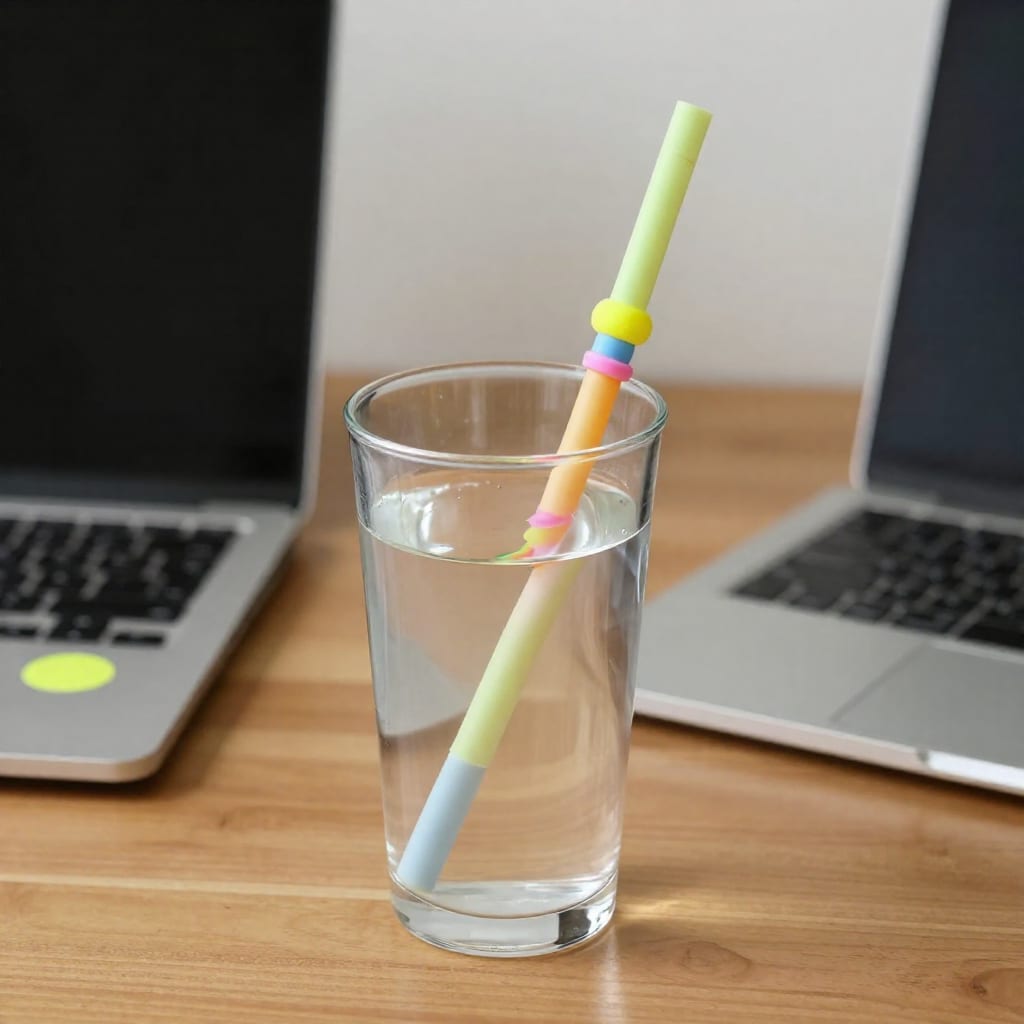
The magic is in the friction reduction. A small cup is easier to pick up, easier to drink from, and easier to refill than a giant bottle. Plus, the refill action itself becomes a micro-habit: you see the empty cup, you fill it, you sip. I chose a clear glass with a colorful silicone straw, because I like the sensory feedback. But any cup works—even a paper cup from a coffee shop, as long as it’s always in the same spot.
I also learned to keep a backup cup in my bag for when I’m out, but the rule is the same: one cup, always within reach. The guilt disappeared because I stopped measuring and started doing. By the end of the first week, I was refilling the cup 6–8 times a day without thinking, which added up to roughly 72–96 ounces. That was more than I’d ever drunk with my big bottle, and I didn’t feel a shred of pressure.
Hack #5: The ‘Sip Goal’ That Replaced My Daily Water Tracking App
I used to be obsessed with tracking my water intake. I tried apps, journals, even a smart bottle that lit up when I hadn’t drunk in an hour. Every single one failed, because tracking turned drinking into a chore. The fifth hack solved that by flipping the goal from volume to frequency.
Instead of aiming for 64 ounces, I set a “sip goal”: four sips every 15 minutes. That’s it. No counting ounces, no logging. Just a simple, memorable number that I could track in my head. I set a timer for 15 minutes (or used a Pomodoro app) and every time it went off, I took four sips. The beauty of this approach is that it’s low-pressure: if I miss a cycle, I just start again at the next one. No guilt, no backlog.
The sip goal works because it aligns with how our brains process habits. A volume goal (like “drink 64 ounces”) is abstract and easy to ignore. A frequency goal (“four sips every 15 minutes”) is concrete, measurable, and tied to a specific time cue. After a few days, I stopped needing the timer—my brain learned the rhythm, and I’d automatically sip every 10–15 minutes. By the end of the first week, I was drinking roughly 40–50 sips per day, which translated to about 50–60 ounces. Not perfect, but far more than my baseline, and without any stress.
If you want to try this hack, start with a lower frequency—say, two sips every 20 minutes—and adjust upward as it feels natural. The goal is consistency, not volume.
Putting It All Together: Your 7-Day Hydration Habit Kickstart
You don’t have to use all five hacks at once. In fact, I recommend starting with just one—the trigger stack is a great first choice—and adding the others over a week. Here’s a simple 7-day plan to build your consistent hydration habit from scratch:
- Day 1: Pick one trigger (e.g., unlocking your phone) and commit to one sip every time you do it. Place a water cup next to your phone.
- Day 2: Add the sip-hold-swallow ritual. Hold each sip for three seconds before swallowing.
- Day 3: Put a bright sticker on your laptop or phone case. Sip every time you see it.
- Day 4: Implement the one-cup rule. Choose one small cup and keep it within arm’s reach at all times.
- Day 5: Set a sip goal: four sips every 15 minutes (or your own frequency). Use a timer if needed.
- Day 6: Combine all hacks. Notice how they reinforce each other—the trigger stack and sticker overlap, the one-cup rule makes sipping easy, and the sip goal keeps you on track.
- Day 7: Reflect and adjust. If one hack feels forced, swap it for another. The goal is a routine that feels natural, not perfect.
By day 7, you’ll likely find yourself sipping water without thinking—just like I did. And the best part? Once the habit is automatic, you can forget about hacks altogether. They’ve done their job.
One final thought: building a consistent hydration habit isn’t about willpower or perfection. It’s about creating tiny, frictionless cues that your brain can’t ignore. Start small, be patient, and remember that even one extra sip today is a win. You’ve got this.
Worth bookmarking before your next busy day—these hacks are designed to stick with you, not stress you out.